Founder partnership / Martial World
Building a membership that works across gyms.
Martial World's founder brought an idea for a Chicago martial arts marketplace: one membership for training across participating gyms. I worked with him to define how it would operate, then built and delivered the product as the sole developer.
Product definition, design, engineering, and launch
Remote, asynchronous founder partnership
Visit Martial World ↗The idea needed rules people could rely on.
A shared membership raises questions that a gym directory does not. Which gyms does a pass include? How many visits can a member use? What can a gym choose to offer, and what record determines its payment? The member experience and the gym's operating rules had to agree.
The founder led the business in Chicago. We worked remotely and asynchronously, with his evolving product direction feeding into my work on scope, design, and engineering. I used AI agents to help build the software while retaining responsibility for the product decisions, technical review, and delivery.
Define the pass before wiring up payments.
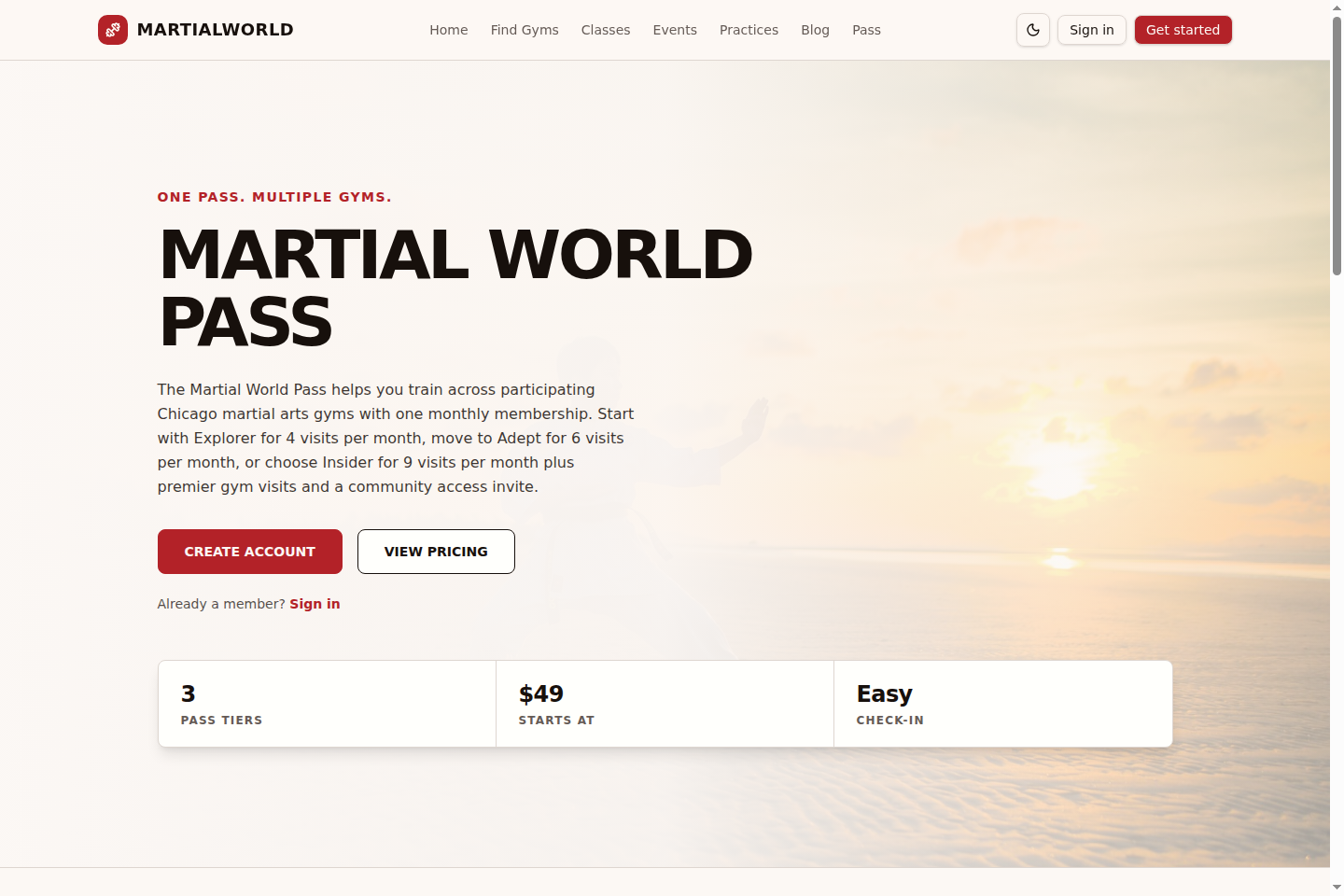
Early product screens and notes did not all describe the same tiers or access rules. I brought them into one launch model: Explorer, Adept, and Insider, each with defined pricing, visit allowances, and participating-gym access.
That decision had to carry through the whole product. The offer someone read before subscribing needed to match what their account showed and what the gym accepted at check-in. I connected billing and access checks to the same plan definitions and kept plan versions so later changes would not overwrite the terms attached to an existing subscription.
A gym listing is not a promise of pass access.
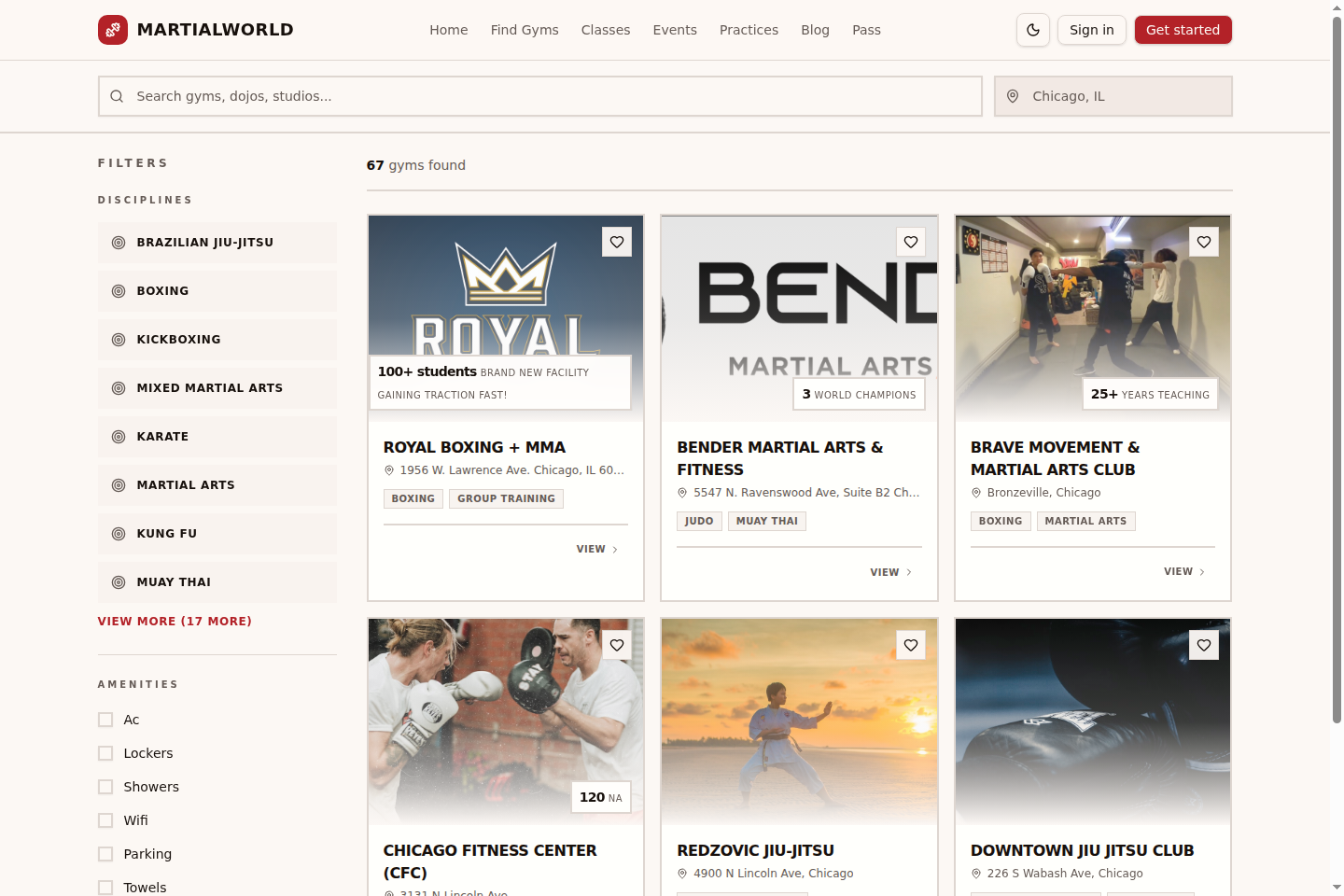
Limiting discovery to pass partners would leave out places people might want to train. Including every gym without distinguishing participation would suggest the membership worked somewhere it did not.
I kept public discovery separate from pass participation. People can explore gyms and save their interest, while access depends on the gym's participation settings and the member's plan. Owners can manage their storefronts, classes, events, and eligible offerings rather than accept a blanket rule for everything they run.
I also separated interest from registration. Saving a class or event records demand without taking a place away from someone ready to book. Both decisions let the marketplace show what is available without overstating what a member has reserved or paid to access.
Make native apps optional for launch.
I made the member pass and gym check-in work in the browser rather than make native apps a condition of launch. Members can sign up, subscribe, and present their pass on the web. Gym operators can scan it and manage their gym there too.
This kept the full membership workflow in the launch scope while leaving another client platform for later. The scope decision was to finish the path from buying access to using it at a gym, including the tools the gym needed on its side.
A check-in has to mean more than showing a code.
I built a short-lived, signed QR pass instead of a static member identifier. A scan checks the member's subscription, remaining visits, and access to that gym. Expired or reused codes are rejected, and the operator sees a reason when access is denied. A manual code-entry option covers situations where camera scanning is unavailable.
Approved check-ins become visit records that feed gym reporting and payout calculations. I built the subscription billing, payout review, payment tracking, and gym statements around those operating needs. A payment attempt and a confirmed payment remain distinct, so a failed or interrupted transfer is not treated as money the gym has received.
Deliver the operating product, then hand over growth.
I delivered the marketplace with member subscriptions and passes, owner-managed gym inventory, check-in, reporting, and partner payout tools. I also handled deployment, data migration, backups, and the controls the founder needed to administer the platform. The delivered scope was a production web product, not a prototype waiting for its billing and operations to be built.
After delivery, the founder took responsibility for growing participation and subscriptions in Chicago, while I remained available for bug fixes. The handoff put the marketplace, member service, and partner operations in place for that next phase.
The work started with a membership idea. My contribution was to help decide what that membership meant for each participant and carry those decisions through the offer, the account, the gym front desk, and the payment record.